How the Right Sand Affects Construction Quality
Choosing the right sand is essential for achieving strong, durable, and high-quality construction. Good-quality sand improves the bonding between cement and aggregates, resulting in better strength and reduced chances of cracks and shrinkage. Proper sand selection also ensures smooth workability, making construction easier and more efficient. Using the right sand increases the lifespan of structures and enhances surface finishing in plastering and concrete works. It helps maintain uniformity in concrete mixes, reduces material wastage, and ensures long-term structural stability. Selecting the correct type of sand plays a crucial role in delivering safe, reliable, and long-lasting construction projects.
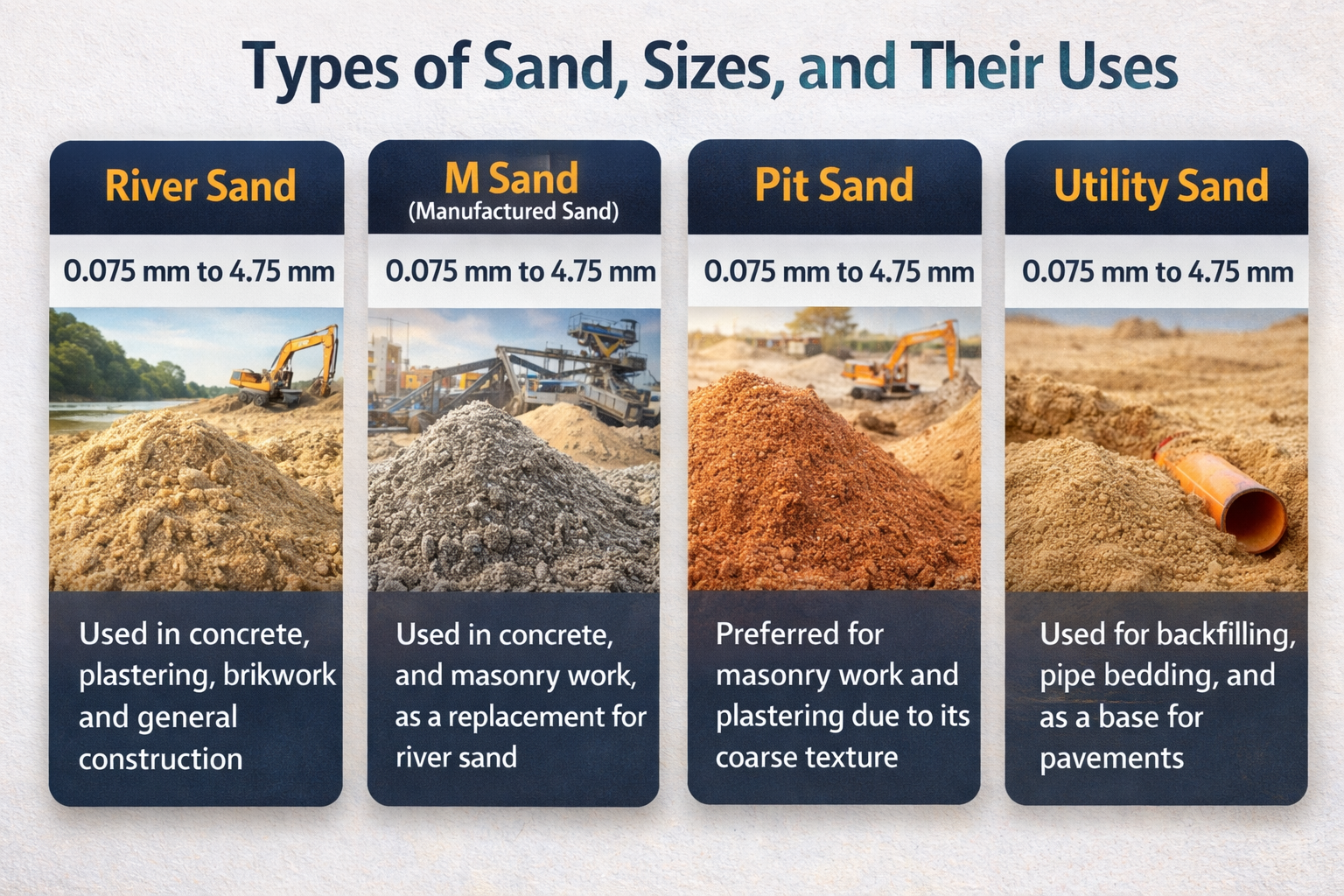
Types of Sand, Sizes, and Their Uses
Sand is a crucial component of construction, providing strength, workability, and durability to concrete, plaster, and masonry work. Based on origin and texture, sand is classified into several types, each with specific sizes and uses.
River Sand
Uses: Used in concrete, plastering, brickwork, and general construction. Provides smooth finishing and better workability
M-Sand (Manufactured Sand)
Uses: Used in concrete and masonry work. Preferred in areas where river sand is scarce or expensive
Pit Sand
Uses: Preferred for masonry work and plastering. Provides high durability and strength in structures.
Utility Sand
Uses:Used for backfilling, pipe bedding, and as a base for pavements. Ideal for landscaping and general site work